State mandated Jewish gfBurtReynolds wrote:What would these guarantees take the form of exactly? And why the necessity for a Jewish state?
Israel & Palestine
-
Mickey

- Mind Your Tanners
- Posts: 9715
- Joined: Wed January 02, 2013 6:02 am
- Location: Tristes Tropiques
Re: Israel & Palestine
VinylGuy wrote:its really tiresome to see these ¨good guys¨ talking about any political stuff in tv while also being kinda funny and hip and cool....its just...please enough of this shit.
-
BurtReynolds

- An enigma of a man shaped hole in the wall between reality and the soul of the devil.
- Posts: 46507
- Joined: Tue January 01, 2013 5:13 pm
- Location: 6000 feet beyond man and time.
-
Anders

- NEVER STOP JAMMING!
- Posts: 23566
- Joined: Fri July 12, 2013 9:11 pm
- Twitter: https://twitter.com/lowenan
- Location: Oslo, Norway
Re: Israel & Palestine
Ending apartheid on Palestinian land is essential. However, I think a two state solution is guaranteed to bring more war, not least due to the geography, history, religious part of the country.
The Lebanese system has deep flaws, and does not work. But I do think there is merit in the part about guarantees for representation from the various religions, could be a way of doing it in Israel as well.
«Politics in Lebanon is based on a sectarian power-sharing structure created on independence from France in 1943. The constitution guarantees all 18 religious sects in the country are ensured representation in government, the military, and the civil service.
Reflecting this, the three key government positions of president, prime minister, and speaker must be split between a Maronite Christian, a Sunni Muslim, and a Shia Muslim.»
18,1% of Israelis are currently muslim (not including those who live in Palestinian land). Currently peacefully living within those borders.Mickey wrote:"There should not be separate Jewish and Arab states, there should be one state, but it should be a Jewish one." Wow sounds great, what could go wrong.
The Lebanese system has deep flaws, and does not work. But I do think there is merit in the part about guarantees for representation from the various religions, could be a way of doing it in Israel as well.
«Politics in Lebanon is based on a sectarian power-sharing structure created on independence from France in 1943. The constitution guarantees all 18 religious sects in the country are ensured representation in government, the military, and the civil service.
Reflecting this, the three key government positions of president, prime minister, and speaker must be split between a Maronite Christian, a Sunni Muslim, and a Shia Muslim.»
-
Anders
- NEVER STOP JAMMING!
- Posts: 23566
- Joined: Fri July 12, 2013 9:11 pm
- Twitter: https://twitter.com/lowenan
- Location: Oslo, Norway
Re: Israel & Palestine
The Jews have a long history of being persecuted, driven from their land. This both before and after the Holocaust. This is why Israel exists today.BurtReynolds wrote:What would these guarantees take the form of exactly? And why the necessity for a Jewish state?
How to do it, would have to in a way that ends apartheid in current Palestinan land, and gives everyonr the chance to live in peace.
-
Mickey
- Mind Your Tanners
- Posts: 9715
- Joined: Wed January 02, 2013 6:02 am
- Location: Tristes Tropiques
Re: Israel & Palestine
What you're describing is not a Jewish state. That's fine, but it's not the same thing.Anders wrote:Ending apartheid on Palestinian land is essential. However, I think a two state solution is guaranteed to bring more war, not least due to the geography, history, religious part of the country.
18,1% of Israelis are currently muslim (not including those who live in Palestinian land). Currently peacefully living within those borders.Mickey wrote:"There should not be separate Jewish and Arab states, there should be one state, but it should be a Jewish one." Wow sounds great, what could go wrong.
The Lebanese system has deep flaws, and does not work. But I do think there is merit in the part about guarantees for representation from the various religions, could be a way of doing it in Israel as well.
«Politics in Lebanon is based on a sectarian power-sharing structure created on independence from France in 1943. The constitution guarantees all 18 religious sects in the country are ensured representation in government, the military, and the civil service.
Reflecting this, the three key government positions of president, prime minister, and speaker must be split between a Maronite Christian, a Sunni Muslim, and a Shia Muslim.»
VinylGuy wrote:its really tiresome to see these ¨good guys¨ talking about any political stuff in tv while also being kinda funny and hip and cool....its just...please enough of this shit.
-
Anders
- NEVER STOP JAMMING!
- Posts: 23566
- Joined: Fri July 12, 2013 9:11 pm
- Twitter: https://twitter.com/lowenan
- Location: Oslo, Norway


-
Anders
- NEVER STOP JAMMING!
- Posts: 23566
- Joined: Fri July 12, 2013 9:11 pm
- Twitter: https://twitter.com/lowenan
- Location: Oslo, Norway
Re: Israel & Palestine
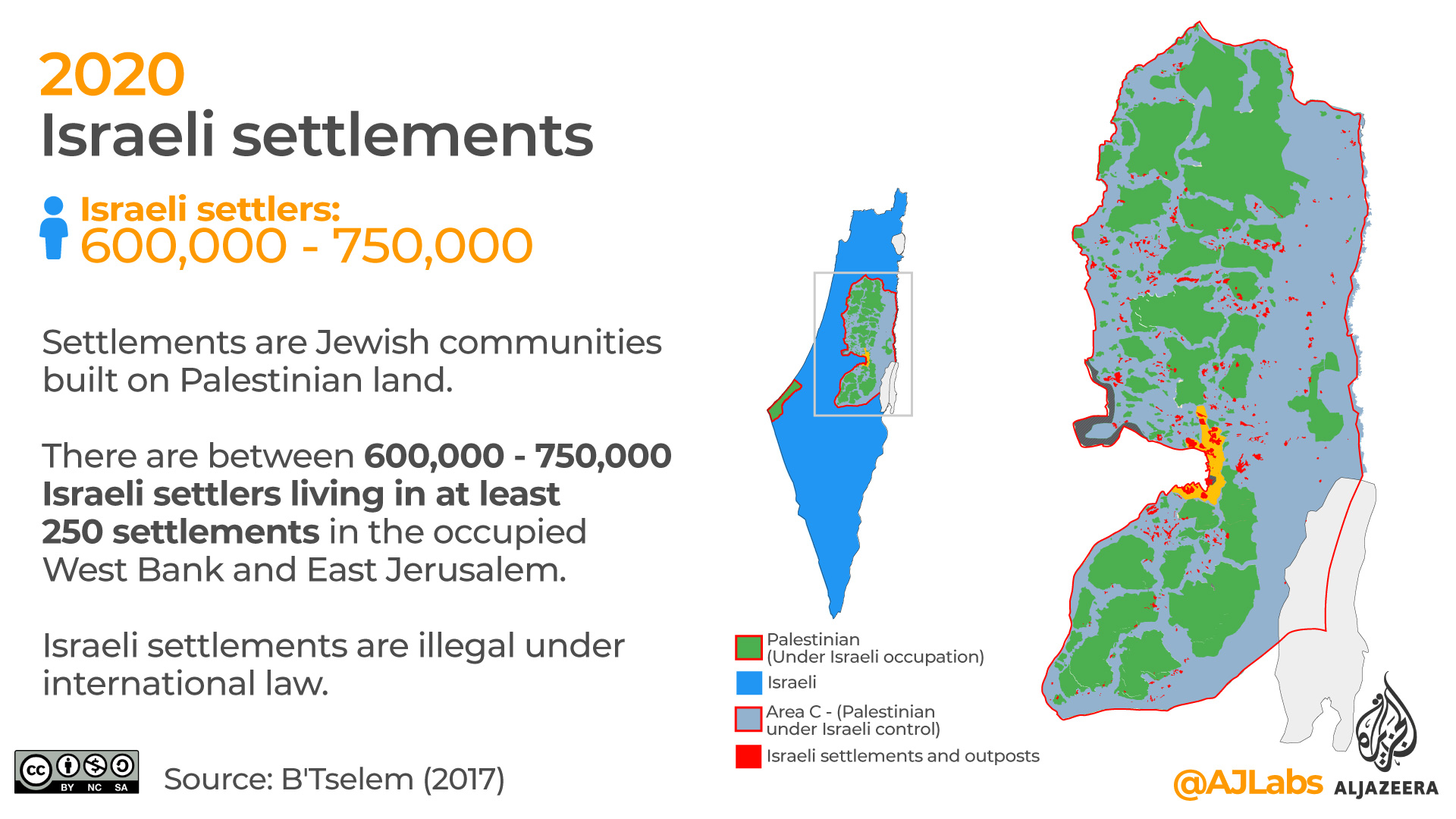
The main thing is peace, but it can't happen, and won't work, without guarantees for the Jews. I think we are likely heading to a future where Gaza and the West Bank will be annexed by Israel. Apart from the international reaction, I think their main worry is that they will end up in the minority, which in the current Israeli political system, could see the Jews out of power in the future, and the country fully changing.Mickey wrote:What you're describing is not a Jewish state. That's fine, but it's not the same thing.Anders wrote:Ending apartheid on Palestinian land is essential. However, I think a two state solution is guaranteed to bring more war, not least due to the geography, history, religious part of the country.
18,1% of Israelis are currently muslim (not including those who live in Palestinian land). Currently peacefully living within those borders.Mickey wrote:"There should not be separate Jewish and Arab states, there should be one state, but it should be a Jewish one." Wow sounds great, what could go wrong.
The Lebanese system has deep flaws, and does not work. But I do think there is merit in the part about guarantees for representation from the various religions, could be a way of doing it in Israel as well.
«Politics in Lebanon is based on a sectarian power-sharing structure created on independence from France in 1943. The constitution guarantees all 18 religious sects in the country are ensured representation in government, the military, and the civil service.
Reflecting this, the three key government positions of president, prime minister, and speaker must be split between a Maronite Christian, a Sunni Muslim, and a Shia Muslim.»
-
simple schoolboy
- Misplaced My Sponge
- Posts: 5934
- Joined: Wed January 02, 2013 3:41 am
Re: Israel & Palestine
She is obviously a test tube baby for the sake of Zionist propaganda. They made one, they could make an unlimited amount.BurtReynolds wrote:I'll finally have my own Abbie Shapiro.
-
Anders
- NEVER STOP JAMMING!
- Posts: 23566
- Joined: Fri July 12, 2013 9:11 pm
- Twitter: https://twitter.com/lowenan
- Location: Oslo, Norway
-
Anders
- NEVER STOP JAMMING!
- Posts: 23566
- Joined: Fri July 12, 2013 9:11 pm
- Twitter: https://twitter.com/lowenan
- Location: Oslo, Norway
Re: Israel & Palestine
https://www.inss.org.il/publication/one-state-models/
"In recent years, there has been an increasing tendency to speak of the “demise of the two-state solution” and to replace it with one state from the Mediterranean Sea to the Jordan River as a solution to the Israeli−Palestinian conflict. The proponents of the one-state model claim that the two states solution is no longer feasible, given that the Green Line has been blurred and Judea and Samaria (the West Bank) is connected to the State of Israel by extensive Israeli settlements and activity−both military and civilian.
This memorandum examines four models: a unitary state that includes the entire territory between the Mediterranean Sea and the Jordan River; a Palestinian autonomous area within the West Bank as part of the State of Israel; a federation divided into Jewish and Palestinian districts; and an Israeli−Palestinian confederation. Public discourse focuses on the question of whether a single state that is both Jewish and democratic is possible. The memorandum also assesses how such a state will operate on the practical level and whether it can serve as a feasible solution to the conflict."
A Unitary State
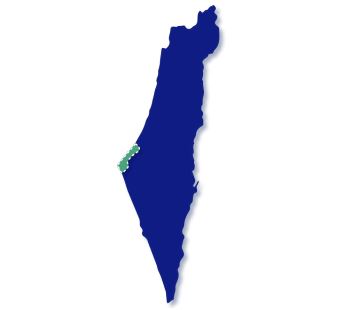
Israel is a single undivided state established on the entire territory, encompassing the existing territory of Israel and the West Bank and potentially also the Gaza Strip...
A State with a Palestinian Autonomy
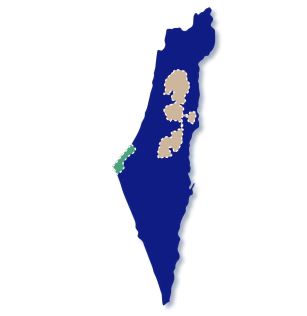
Israel is a single state on the entire territory of Israel and the West Bank (and potentially the Gaza Strip) that includes within it a Palestinian autonomous area...
A Federal State
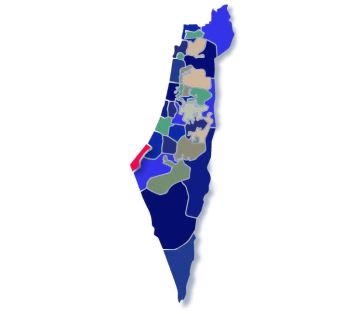
A single state with a central federal government that is composed of federative districts—some districts having a Jewish character and others having a Palestinian character. The division can involve just one Jewish district and one Palestinian district or several districts of each type...
A Confederation
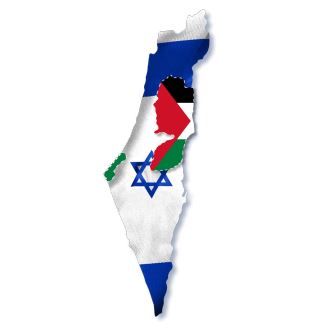
Two states, the State of Israel and the Palestinian state, separated by a border based on the Green Line, no physical barrier, free movement, and a joint confederative government...
"In recent years, there has been an increasing tendency to speak of the “demise of the two-state solution” and to replace it with one state from the Mediterranean Sea to the Jordan River as a solution to the Israeli−Palestinian conflict. The proponents of the one-state model claim that the two states solution is no longer feasible, given that the Green Line has been blurred and Judea and Samaria (the West Bank) is connected to the State of Israel by extensive Israeli settlements and activity−both military and civilian.
This memorandum examines four models: a unitary state that includes the entire territory between the Mediterranean Sea and the Jordan River; a Palestinian autonomous area within the West Bank as part of the State of Israel; a federation divided into Jewish and Palestinian districts; and an Israeli−Palestinian confederation. Public discourse focuses on the question of whether a single state that is both Jewish and democratic is possible. The memorandum also assesses how such a state will operate on the practical level and whether it can serve as a feasible solution to the conflict."
A Unitary State
Israel is a single undivided state established on the entire territory, encompassing the existing territory of Israel and the West Bank and potentially also the Gaza Strip...
A State with a Palestinian Autonomy
Israel is a single state on the entire territory of Israel and the West Bank (and potentially the Gaza Strip) that includes within it a Palestinian autonomous area...
A Federal State
A single state with a central federal government that is composed of federative districts—some districts having a Jewish character and others having a Palestinian character. The division can involve just one Jewish district and one Palestinian district or several districts of each type...
A Confederation
Two states, the State of Israel and the Palestinian state, separated by a border based on the Green Line, no physical barrier, free movement, and a joint confederative government...
-
Anders
- NEVER STOP JAMMING!
- Posts: 23566
- Joined: Fri July 12, 2013 9:11 pm
- Twitter: https://twitter.com/lowenan
- Location: Oslo, Norway
Re: The War on Terror /Central Asia/Mid East/Africa thread
I made an Israel & Palestine thread. Feel like this is the wrong thread to discuss all of this. The headline of the thread is about so many other things, and primarily seems to be about The War On Terror.
-
BurtReynolds
- An enigma of a man shaped hole in the wall between reality and the soul of the devil.
- Posts: 46507
- Joined: Tue January 01, 2013 5:13 pm
- Location: 6000 feet beyond man and time.
Re: Israel & Palestine
As a proponent of peace at all costs, would you also be in favor of a one state solution to the Ukraine/Russia war?
RM's resident disinformation expert.
-
Anders
- NEVER STOP JAMMING!
- Posts: 23566
- Joined: Fri July 12, 2013 9:11 pm
- Twitter: https://twitter.com/lowenan
- Location: Oslo, Norway
Re: Israel & Palestine
No, but that is what Russia wants, run from Moscow, with no Ukrainian input, apart from some Russian puppet. Still might end up that way, and it has been that way for hundreds of years in the past.
Of course I want peace in Ukraine as well. But let's keep that to the Ukraine or Russia threads, and I am ready to discuss anything about it there.
Of course I want peace in Ukraine as well. But let's keep that to the Ukraine or Russia threads, and I am ready to discuss anything about it there.
-
Anders
- NEVER STOP JAMMING!
- Posts: 23566
- Joined: Fri July 12, 2013 9:11 pm
- Twitter: https://twitter.com/lowenan
- Location: Oslo, Norway
Re: Israel & Palestine
Let's look at the two state solution:
https://www.nytimes.com/2016/12/29/worl ... ution.html
The two-state solution would establish an independent Palestinian state alongside Israel — two states for two peoples. In theory, this would win Israel security and allow it to retain a Jewish demographic majority (letting the country remain Jewish and democratic) while granting the Palestinians a state.
Most governments and world bodies have set achievement of the two-state solution as official policy, including the United States, the United Nations, the Palestinian Authority and Israel. This goal has been the basis of peace talks for decades.
Why is the solution so difficult to achieve?
There are four issues that have proved most challenging. Each comes down to a set of bedrock demands between the two sides that, in execution, often appear to be mutually exclusive.
1. Borders: There is no consensus about precisely where to draw the line. Generally, most believe the border would follow the lines before the Arab-Israeli war of 1967, but with Israel keeping some of the land where it has built settlements and in exchange providing other land to the Palestinians to compensate. Israel has constructed barriers along and within the West Bank that many analysts worry create a de facto border, and it has built settlements in the West Bank that will make it difficult to establish that land as part of an independent Palestine. As time goes on, settlements grow, theoretically making any future Palestinian state smaller and possibly breaking it up into noncontiguous pieces.
2. Jerusalem: Both sides claim Jerusalem as their capital and consider it a center of religious worship and cultural heritage. The two-state solution typically calls for dividing it into an Israeli West and a Palestinian East, but it is not easy to draw the line — Jewish, Muslim and Christian holy sites are on top of one another. Israel has declared Jerusalem its “undivided capital,” effectively annexing its eastern half, and has built up construction that entrenches Israeli control of the city.
3. Refugees: Large numbers of Palestinians fled or were expelled from their homes in what is now Israel, primarily during the 1948 Arab-Israeli war that came after Israel’s creation. They and their descendants now number five million and believe they deserve the right to return. This is a nonstarter for Israel: Too many returnees would end Jews’ demographic majority and therefore Israel’s status as both a Jewish and a democratic state.
4. Security: For Palestinians, security means an end to foreign military occupation. For Israelis, this means avoiding a takeover of the West Bank by a group like Hamas that would threaten Israelis (as happened in Gaza after Israel’s 2005 withdrawal). It also means keeping Israel defensible against foreign armies, which often means requiring a continued Israeli military presence in parts of the West Bank.
Why do some consider the two-state solution dead?
There is plenty of blame to go around. The Palestinian leadership is divided between two governments that cannot come to terms. The leadership in the West Bank lacks the political legitimacy to make far-reaching but necessary concessions, and the leadership in Gaza does not even recognize Israel, whose citizens it frequently attacks. The United States, which has brokered talks for years, has taken more than a few missteps.
And most important, the current Israeli leadership, though it nominally supports a two-state solution, appears to oppose it in practice.
https://www.nytimes.com/2016/12/29/worl ... ution.html
The two-state solution would establish an independent Palestinian state alongside Israel — two states for two peoples. In theory, this would win Israel security and allow it to retain a Jewish demographic majority (letting the country remain Jewish and democratic) while granting the Palestinians a state.
Most governments and world bodies have set achievement of the two-state solution as official policy, including the United States, the United Nations, the Palestinian Authority and Israel. This goal has been the basis of peace talks for decades.
Why is the solution so difficult to achieve?
There are four issues that have proved most challenging. Each comes down to a set of bedrock demands between the two sides that, in execution, often appear to be mutually exclusive.
1. Borders: There is no consensus about precisely where to draw the line. Generally, most believe the border would follow the lines before the Arab-Israeli war of 1967, but with Israel keeping some of the land where it has built settlements and in exchange providing other land to the Palestinians to compensate. Israel has constructed barriers along and within the West Bank that many analysts worry create a de facto border, and it has built settlements in the West Bank that will make it difficult to establish that land as part of an independent Palestine. As time goes on, settlements grow, theoretically making any future Palestinian state smaller and possibly breaking it up into noncontiguous pieces.
2. Jerusalem: Both sides claim Jerusalem as their capital and consider it a center of religious worship and cultural heritage. The two-state solution typically calls for dividing it into an Israeli West and a Palestinian East, but it is not easy to draw the line — Jewish, Muslim and Christian holy sites are on top of one another. Israel has declared Jerusalem its “undivided capital,” effectively annexing its eastern half, and has built up construction that entrenches Israeli control of the city.
3. Refugees: Large numbers of Palestinians fled or were expelled from their homes in what is now Israel, primarily during the 1948 Arab-Israeli war that came after Israel’s creation. They and their descendants now number five million and believe they deserve the right to return. This is a nonstarter for Israel: Too many returnees would end Jews’ demographic majority and therefore Israel’s status as both a Jewish and a democratic state.
4. Security: For Palestinians, security means an end to foreign military occupation. For Israelis, this means avoiding a takeover of the West Bank by a group like Hamas that would threaten Israelis (as happened in Gaza after Israel’s 2005 withdrawal). It also means keeping Israel defensible against foreign armies, which often means requiring a continued Israeli military presence in parts of the West Bank.
Why do some consider the two-state solution dead?
There is plenty of blame to go around. The Palestinian leadership is divided between two governments that cannot come to terms. The leadership in the West Bank lacks the political legitimacy to make far-reaching but necessary concessions, and the leadership in Gaza does not even recognize Israel, whose citizens it frequently attacks. The United States, which has brokered talks for years, has taken more than a few missteps.
And most important, the current Israeli leadership, though it nominally supports a two-state solution, appears to oppose it in practice.
- Spoiler: show
-
Anders
- NEVER STOP JAMMING!
- Posts: 23566
- Joined: Fri July 12, 2013 9:11 pm
- Twitter: https://twitter.com/lowenan
- Location: Oslo, Norway
Re: Israel & Palestine
https://www.washingtoninstitute.org/pol ... nians-want
What do Palestinians want?
Those who support permanent peace with Israel are in the minority even among the younger generation, but Washington should still prepare for the future by working around the economic edges.
This article, written in 2021, is based on polling data collected in 2020. For our latest analysis and July 2023 Palestinian polling data, click here.
In the wake of the recent ten-day conflict between Israel and Hamas, which began after the Israeli Supreme Court suspended its anticipated ruling on the eviction of Palestinians from the Jerusalem neighborhood of Sheikh Jarrah and clashes flared at the Al-Aqsa mosque, a June report from the Palestinian Center for Policy and Survey Research (PCPSR) found that a “paradigm shift” had taken place in Palestinian public opinion: There is now growing support for Hamas and armed struggle. This change, along with the Biden Administration’s intention to reverse Trump Administration policy and become involved in the issue, has returned the conflict to the U.S. foreign policy agenda.
Does the current state of Palestinian opinion reflect just the recent escalation? To see whether this is the case, we must take a closer look at public opinion over recent years. The Washington Institute for Near East Policy’s Palestinian public opinion polls from 2014 to 2020, conducted with the Beit Sahour-based Palestine Center for Public Opinion and several other Palestinian polling organizations, enable us to do so. The results are unexpected, bearing good and bad news.
First, while the current U.S. administration has recently emphasized its continued commitment to the two-state solution, this is no longer a popular position among Palestinians. Less than 40 percent of the Palestinian public—in the West Bank, Gaza, and East Jerusalem—supports it over one-state alternatives. Support for a two-state solution has declined steadily since 2018.
Further, most Palestinians believe that a two-state solution is unlikely to emerge from the conflict. Instead, a majority of them say they prefer to reclaim all of historic Palestine, including the pre-1967 Israel. A one-state solution with Arabs and Jews holding equal rights comes in second. Similarly, recent polling from PCPSR finds support among Palestinians and Israeli Jews for a two-state solution has dropped to 43 percent and 42 percent, respectively.
This changed political reality poses threats to U.S. policy objectives: peace, stability, democracy, and human rights. But do the trends also reveal areas of opportunity, in which U.S. efforts and Palestinian and Israeli policies could influence Palestinian public opinion to make peace more likely?
What do Palestinians want?
Those who support permanent peace with Israel are in the minority even among the younger generation, but Washington should still prepare for the future by working around the economic edges.
This article, written in 2021, is based on polling data collected in 2020. For our latest analysis and July 2023 Palestinian polling data, click here.
In the wake of the recent ten-day conflict between Israel and Hamas, which began after the Israeli Supreme Court suspended its anticipated ruling on the eviction of Palestinians from the Jerusalem neighborhood of Sheikh Jarrah and clashes flared at the Al-Aqsa mosque, a June report from the Palestinian Center for Policy and Survey Research (PCPSR) found that a “paradigm shift” had taken place in Palestinian public opinion: There is now growing support for Hamas and armed struggle. This change, along with the Biden Administration’s intention to reverse Trump Administration policy and become involved in the issue, has returned the conflict to the U.S. foreign policy agenda.
Does the current state of Palestinian opinion reflect just the recent escalation? To see whether this is the case, we must take a closer look at public opinion over recent years. The Washington Institute for Near East Policy’s Palestinian public opinion polls from 2014 to 2020, conducted with the Beit Sahour-based Palestine Center for Public Opinion and several other Palestinian polling organizations, enable us to do so. The results are unexpected, bearing good and bad news.
First, while the current U.S. administration has recently emphasized its continued commitment to the two-state solution, this is no longer a popular position among Palestinians. Less than 40 percent of the Palestinian public—in the West Bank, Gaza, and East Jerusalem—supports it over one-state alternatives. Support for a two-state solution has declined steadily since 2018.
Further, most Palestinians believe that a two-state solution is unlikely to emerge from the conflict. Instead, a majority of them say they prefer to reclaim all of historic Palestine, including the pre-1967 Israel. A one-state solution with Arabs and Jews holding equal rights comes in second. Similarly, recent polling from PCPSR finds support among Palestinians and Israeli Jews for a two-state solution has dropped to 43 percent and 42 percent, respectively.
This changed political reality poses threats to U.S. policy objectives: peace, stability, democracy, and human rights. But do the trends also reveal areas of opportunity, in which U.S. efforts and Palestinian and Israeli policies could influence Palestinian public opinion to make peace more likely?
- Spoiler: show
-
Anders
- NEVER STOP JAMMING!
- Posts: 23566
- Joined: Fri July 12, 2013 9:11 pm
- Twitter: https://twitter.com/lowenan
- Location: Oslo, Norway
Re: Israel & Palestine
https://www.euronews.com/2023/10/15/two ... cepticism.
Fewer people in both Israel and Palestine believed the two states could co-exist peacefully - even before the outbreak of war with Hamas.
Public sentiment among members of the public in both Israel and Palestinian-controlled areas was moving away from the idea of creating a two-state solution for the region, even before Hamas launched terror attacks last weekend.
Public surveys carried out in Israel, Gaza, and the West Bank have revealed that only one in three people now see the feasibility of a political resolution to the issue.
People were asked if a way could be found for resolution by forming an independent Palestinian state and whether it could co-exist peacefully with Israel.
According to the Pew Research Center's survey, a growing number of Israelis are beginning to doubt the feasibility of a two-state solution, with only 35% of respondents believing that a peaceful coexistence between Israel and Palestine can be achieved.
This marks a 15 percentage point decrease from a decade ago, and the lowest figures to date.
Notably, the sentiment against a two-state solution has significantly shifted among the Arab Israelis compared to the Jewish Israelis.
Arab Israelis are now 33% less likely to believe in this approach compared to 2013. Their Jewish counterparts are 14% less likely to see this possibility in the same time period.
The survey was, however, conducted in April and published in September, before the Israel-Hamas war erupted following an unprecedented attack on October 7.
Palestinians do not think a two-state solution is feasible
Data available on the Palestinian side is more nuanced.
Nearly one-third of the Palestinians now express support for the two-state solution, according to a survey conducted by the Palestinian Center for Policy and Survey Research in September.
While there has been a slight increase in support for a two-state solution, a majority of Palestinians still believe it is not the way forward.
Some 67% of Palestinians oppose the two-state solution, citing settlement expansion as a key reason for their scepticism.
Plus a growing dissent against the lack of implementation of the Oslo Accords – a pair of agreements signed in 1993 to ensure the "right of the Palestinian people to self-determination" – and Israel’s use of coercion in the occupied territories has only made matters worse.
Fewer people in both Israel and Palestine believed the two states could co-exist peacefully - even before the outbreak of war with Hamas.
Public sentiment among members of the public in both Israel and Palestinian-controlled areas was moving away from the idea of creating a two-state solution for the region, even before Hamas launched terror attacks last weekend.
Public surveys carried out in Israel, Gaza, and the West Bank have revealed that only one in three people now see the feasibility of a political resolution to the issue.
People were asked if a way could be found for resolution by forming an independent Palestinian state and whether it could co-exist peacefully with Israel.
According to the Pew Research Center's survey, a growing number of Israelis are beginning to doubt the feasibility of a two-state solution, with only 35% of respondents believing that a peaceful coexistence between Israel and Palestine can be achieved.
This marks a 15 percentage point decrease from a decade ago, and the lowest figures to date.
Notably, the sentiment against a two-state solution has significantly shifted among the Arab Israelis compared to the Jewish Israelis.
Arab Israelis are now 33% less likely to believe in this approach compared to 2013. Their Jewish counterparts are 14% less likely to see this possibility in the same time period.
The survey was, however, conducted in April and published in September, before the Israel-Hamas war erupted following an unprecedented attack on October 7.
Palestinians do not think a two-state solution is feasible
Data available on the Palestinian side is more nuanced.
Nearly one-third of the Palestinians now express support for the two-state solution, according to a survey conducted by the Palestinian Center for Policy and Survey Research in September.
While there has been a slight increase in support for a two-state solution, a majority of Palestinians still believe it is not the way forward.
Some 67% of Palestinians oppose the two-state solution, citing settlement expansion as a key reason for their scepticism.
Plus a growing dissent against the lack of implementation of the Oslo Accords – a pair of agreements signed in 1993 to ensure the "right of the Palestinian people to self-determination" – and Israel’s use of coercion in the occupied territories has only made matters worse.
-
Rob

- Future Drummer
- Posts: 2892
- Joined: Fri January 04, 2013 1:46 am
- Location: Connecticut
Re: Israel & Palestine
I would say the two state solution died with Netanyahu. He and his admin never had an interest in it. They want the land. Seems he was willing to let Gaza go - even help maintain the status quo there with Hamas, while they slowly annex the West Bank little by little, making a Palestinian state impossible anyway. There are probably creative ways to make a one state solution work on paper, but in practice I just don’t see it. Those models aren’t going to be able to account for 75 years of conflict. There are probably no Palestinians left alive who remember a time before they became pawns in a wider conflict. As awful as it is, it’s actually really easy to understand why Palestinians might grow up to hate Israelis and want them destroyed. They’re human, and the fact that Jews have a brutal history - to the point where the world agrees that it’s more important to have a safe haven for them, than hold true to democratic ideals - doesn’t matter to the Palestinians who know nothing but horrendous suffering themselves. And now Oct 7 has brought the rot and desperation that is Palestine back to the spotlight in a truly terrifying way. I would be perfectly fine with Palestinian refugees coming here where I live, but if I were Jewish living in Israel… there would simply be no trust.
This is basically the only world conflict I’ve followed along to for a long time. You obviously can’t blame Netanyahu and his admin for 75 years, but I do think his reign marks the end of any real attempt on the part of Israel to achieve Palestinian statehood or Israeli citizenship for Palestinians. He wants them gone. That land belongs to Israel. Twenty years ago a 2 state solution seemed like the only common sense solution that, surely, the world would figure out. Then it just died. Not sure anyone really realized it at the time, but in hindsight… I have zero hope we’ll see anything but worsening conditions for the foreseeable future.
This is basically the only world conflict I’ve followed along to for a long time. You obviously can’t blame Netanyahu and his admin for 75 years, but I do think his reign marks the end of any real attempt on the part of Israel to achieve Palestinian statehood or Israeli citizenship for Palestinians. He wants them gone. That land belongs to Israel. Twenty years ago a 2 state solution seemed like the only common sense solution that, surely, the world would figure out. Then it just died. Not sure anyone really realized it at the time, but in hindsight… I have zero hope we’ll see anything but worsening conditions for the foreseeable future.
-
Anders
- NEVER STOP JAMMING!
- Posts: 23566
- Joined: Fri July 12, 2013 9:11 pm
- Twitter: https://twitter.com/lowenan
- Location: Oslo, Norway
Re: Israel & Palestine
Saw this on Quora, so it's just one person posting, not a published article. But I found it interesting:
A frequently recurring theme when discussing the history of Palestine, is the question of “who was there first?”. The implication being, whoever was there first deserves ownership of the land. I have lost count of how many times I have encountered the argument that “The Jewish people have been in Palestine before the Muslims/Arabs,” or a variation thereof. This has always struck me as an interesting example of how people learn just enough history to support their world view, separating it completely from any historical context or the larger picture of the region.
Since this question is so widespread, and since I see it answered in different, and in my opinion, unhelpful ways, I would like to open up the topic for wider discussion.
The argument is simple to follow: Palestinians today are mostly Arabs. The Arabs came to the Levant with the Muslim conquest of the region. Therefore, Arabs -and as an extension Palestinians- have only been in Palestine and the Levant since the seventh century AD.
There are a couple of glaring problems with this line of thought. First of all, there is a clear conflation of Arabs, Muslims and Palestinians. None of these are interchangeable. Arabs have had a long history in the Levant before the advent of Islam. For example, The Qedarite and later on the Nabataean kingdoms ruled over Jordan, Palestine and Sinai a whole millennium before Muslims ever set foot in the area. Another example would be the Ghassanid kingdom, which was a Christian Arab kingdom that extended over vast areas of the region. As a matter of fact, many prominent Christian families in Palestine today, such as Maalouf, Haddad and Khoury, can trace their lineage back to the Ghassanid kingdom..
The second problem with this is that there is a misunderstanding of the process that is the Arabization of the Middle East and North Africa. Once again, we must view the Islamization of newly conquered lands and their Arabization as two distinct phenomena. The Islamization process began instantly, albeit slowly. Persia, for example took over 2 centuries to become a majority Muslim province. The Levant, much longer. The Arabization of conquered provinces though, began later than their Islamization. The beginning of this process can be traced back to the Marwanid dynasty of the Ummayad Caliphate. Until that point, each province was ruled mostly with its own language, laws and currency. The process of the Arabization of the state united all these under Arabic speaking officials, and made it law that the language of state and of commerce would become Arabic. Thus, it became advantageous to assimilate into this identity, as many government positions and trade deals were offered only to Muslim Arabs.
So although the the population of all of these lands (the lands conquered by Arabic Muslims in the 7th century, but not particularly all of the populace in Palestine for sure due to significant Arab presence there as well in different eras and different Arabic kingdoms prior to that) were not all ethnically Arab, they came to identify as such over a millennium. Arab stopped being a purely ethnic identity, and morphed into a mainly cultural and linguistic one. In contrast to European colonialism of the new world, where the native population was mostly eradicated to make place for the invaders, the process in MENA is one of the conquered peoples mixing with and coming to identify as their conquerors without being physically removed, if not as Arabs, then as Muslims.
Following from this, the Palestinian Arabs of today did not suddenly appear from the Arabian Peninsula in the 7th century to settle in Palestine, but are the same indigenous peoples living there who changed how they identified over time. This includes the descendants of every group that has ever called Palestine their home. When regions change rulers, they don’t normally change populations. Throughout history, peoples have often changed how they identified politically. The Sardinians eventually became Italians, Prussians became Germans. It would be laughable to suggest that the Sardinians were kicked out and replaced by a distinct foreign Italian people. We must separate the political nationalist identity of people from their personhood as human beings, as nationalism is a relatively modern concept, especially in the Middle East.
Naturally, no region is a closed container. Trade, immigration, invasion and intermarriage all played a role in creating the current buildup of Palestinian society. There were many additions to the people of the land over the millennia. However, the fact remains that there was never a process where Arab or Muslim conquerors completely replaced the native population living there, only added to them.
The trap:
So, what does this all mean for Palestine?
Absolutely nothing.
Although the argument has many ahistorical assumptions and claims, it is not these which form its greatest weakness. The whole argument is a trap. The basic implication of this line of argumentation is as follows:
If the Jewish people were in Palestine before the Arabs, then the land belongs to them. Therefore, the creation of Israel would be justified.
From my experience, whenever this argument is used, the automatic response of Palestinians is to say that their ancestors were there first. These ancestors being the Canaanites. It is true that Palestinians are descendants of ancient civilizations and religions that lived in the region for centuries, including Canaanites. However, the idea that Palestinians are the descendants of only one particular group in a region with mass migrations and dozens of different empires and peoples is not only ahistorical, but this line of thought indirectly legitimizes the original argument they are fighting against.
This is because it implies that the only reason Israel’s creation is unjustified is because their Palestinian ancestors were there first. It implies that the problem with the argument lies in the details, not that the argument as a whole is absolute nonsense and shouldn’t even be entertained.
The ethnic cleansing, massacres and colonialism needed to establish Israel can never be justified, regardless of who was there first. It’s a moot point. Even if we follow the argument that Palestinians have only been there for 1300 years, does this suddenly legitimize the expulsion of hundreds of thousands? Of course not. There is no possible scenario where it is excusable to ethnically cleanse a people and colonize their lands. Human rights apply to people universally, regardless of whether they have lived in an area for a year or ten thousand years.
If we reject the “we were there first” argument, and not treat it as a legitimizing factor for Israel’s creation, then we can focus on the real history, without any ideological agendas. We could trace how our pasts intersected throughout the centuries. After all, there is indeed Jewish history in Palestine. This history forms a part of the Palestinian past and heritage, just like every other group, kingdom or empire that settled there does. We must stop viewing Palestinian and Jewish histories as competing, mutually exclusive entities, because for most of history they have not been.
These positions can be maintained while simultaneously rejecting Zionism and its colonialism. After all, this ideologically driven impulse to imagine our ancestors as some closed, well defined, unchanging homogenous group having exclusive ownership over lands corresponding to modern day borders has nothing to do with the actual history of the area, and everything to do with modern notions of ethnic nationalism and colonialism.
A frequently recurring theme when discussing the history of Palestine, is the question of “who was there first?”. The implication being, whoever was there first deserves ownership of the land. I have lost count of how many times I have encountered the argument that “The Jewish people have been in Palestine before the Muslims/Arabs,” or a variation thereof. This has always struck me as an interesting example of how people learn just enough history to support their world view, separating it completely from any historical context or the larger picture of the region.
Since this question is so widespread, and since I see it answered in different, and in my opinion, unhelpful ways, I would like to open up the topic for wider discussion.
The argument is simple to follow: Palestinians today are mostly Arabs. The Arabs came to the Levant with the Muslim conquest of the region. Therefore, Arabs -and as an extension Palestinians- have only been in Palestine and the Levant since the seventh century AD.
There are a couple of glaring problems with this line of thought. First of all, there is a clear conflation of Arabs, Muslims and Palestinians. None of these are interchangeable. Arabs have had a long history in the Levant before the advent of Islam. For example, The Qedarite and later on the Nabataean kingdoms ruled over Jordan, Palestine and Sinai a whole millennium before Muslims ever set foot in the area. Another example would be the Ghassanid kingdom, which was a Christian Arab kingdom that extended over vast areas of the region. As a matter of fact, many prominent Christian families in Palestine today, such as Maalouf, Haddad and Khoury, can trace their lineage back to the Ghassanid kingdom..
The second problem with this is that there is a misunderstanding of the process that is the Arabization of the Middle East and North Africa. Once again, we must view the Islamization of newly conquered lands and their Arabization as two distinct phenomena. The Islamization process began instantly, albeit slowly. Persia, for example took over 2 centuries to become a majority Muslim province. The Levant, much longer. The Arabization of conquered provinces though, began later than their Islamization. The beginning of this process can be traced back to the Marwanid dynasty of the Ummayad Caliphate. Until that point, each province was ruled mostly with its own language, laws and currency. The process of the Arabization of the state united all these under Arabic speaking officials, and made it law that the language of state and of commerce would become Arabic. Thus, it became advantageous to assimilate into this identity, as many government positions and trade deals were offered only to Muslim Arabs.
So although the the population of all of these lands (the lands conquered by Arabic Muslims in the 7th century, but not particularly all of the populace in Palestine for sure due to significant Arab presence there as well in different eras and different Arabic kingdoms prior to that) were not all ethnically Arab, they came to identify as such over a millennium. Arab stopped being a purely ethnic identity, and morphed into a mainly cultural and linguistic one. In contrast to European colonialism of the new world, where the native population was mostly eradicated to make place for the invaders, the process in MENA is one of the conquered peoples mixing with and coming to identify as their conquerors without being physically removed, if not as Arabs, then as Muslims.
Following from this, the Palestinian Arabs of today did not suddenly appear from the Arabian Peninsula in the 7th century to settle in Palestine, but are the same indigenous peoples living there who changed how they identified over time. This includes the descendants of every group that has ever called Palestine their home. When regions change rulers, they don’t normally change populations. Throughout history, peoples have often changed how they identified politically. The Sardinians eventually became Italians, Prussians became Germans. It would be laughable to suggest that the Sardinians were kicked out and replaced by a distinct foreign Italian people. We must separate the political nationalist identity of people from their personhood as human beings, as nationalism is a relatively modern concept, especially in the Middle East.
Naturally, no region is a closed container. Trade, immigration, invasion and intermarriage all played a role in creating the current buildup of Palestinian society. There were many additions to the people of the land over the millennia. However, the fact remains that there was never a process where Arab or Muslim conquerors completely replaced the native population living there, only added to them.
The trap:
So, what does this all mean for Palestine?
Absolutely nothing.
Although the argument has many ahistorical assumptions and claims, it is not these which form its greatest weakness. The whole argument is a trap. The basic implication of this line of argumentation is as follows:
If the Jewish people were in Palestine before the Arabs, then the land belongs to them. Therefore, the creation of Israel would be justified.
From my experience, whenever this argument is used, the automatic response of Palestinians is to say that their ancestors were there first. These ancestors being the Canaanites. It is true that Palestinians are descendants of ancient civilizations and religions that lived in the region for centuries, including Canaanites. However, the idea that Palestinians are the descendants of only one particular group in a region with mass migrations and dozens of different empires and peoples is not only ahistorical, but this line of thought indirectly legitimizes the original argument they are fighting against.
This is because it implies that the only reason Israel’s creation is unjustified is because their Palestinian ancestors were there first. It implies that the problem with the argument lies in the details, not that the argument as a whole is absolute nonsense and shouldn’t even be entertained.
The ethnic cleansing, massacres and colonialism needed to establish Israel can never be justified, regardless of who was there first. It’s a moot point. Even if we follow the argument that Palestinians have only been there for 1300 years, does this suddenly legitimize the expulsion of hundreds of thousands? Of course not. There is no possible scenario where it is excusable to ethnically cleanse a people and colonize their lands. Human rights apply to people universally, regardless of whether they have lived in an area for a year or ten thousand years.
If we reject the “we were there first” argument, and not treat it as a legitimizing factor for Israel’s creation, then we can focus on the real history, without any ideological agendas. We could trace how our pasts intersected throughout the centuries. After all, there is indeed Jewish history in Palestine. This history forms a part of the Palestinian past and heritage, just like every other group, kingdom or empire that settled there does. We must stop viewing Palestinian and Jewish histories as competing, mutually exclusive entities, because for most of history they have not been.
These positions can be maintained while simultaneously rejecting Zionism and its colonialism. After all, this ideologically driven impulse to imagine our ancestors as some closed, well defined, unchanging homogenous group having exclusive ownership over lands corresponding to modern day borders has nothing to do with the actual history of the area, and everything to do with modern notions of ethnic nationalism and colonialism.
-
dimejinky99

- what on earth am I talking about
- Posts: 39789
- Joined: Wed January 02, 2013 12:35 am
Re: The War on Terror /Central Asia/Mid East/Africa thread
Anders wrote:I made an Israel & Palestine thread. Feel like this is the wrong thread to discuss all of this. The headline of the thread is about so many other things, and primarily seems to be about The War On Terror.
Oh. The mods won’t thank you for that.
Calibrate your enthusiasm
-
dimejinky99
- what on earth am I talking about
- Posts: 39789
- Joined: Wed January 02, 2013 12:35 am
Re: Israel & Palestine
How to achieve any of this while Israel behaves like it does though?
Before oct 7th, there were 1600 Palestinian children under the age of 16, in Israeli prisons.
They’re arrested and brutalised by IDF pretty much on sight. They don’t even have to have done anything. Just unfortunate to be in the wrong place, wrong time.
So we know what at leads to.
So it’s up to Israel to break that cycle and step away completely and the only way I see that happening or working is to put the UN peacekeeping missions and troops on the ground.
Trouble is Israel has blocked that idea at several points and previously has shot at and killed UN troops
I know I have a bias but surely everyone can see who’s the problem in all this and creator of all their own shit
Before oct 7th, there were 1600 Palestinian children under the age of 16, in Israeli prisons.
They’re arrested and brutalised by IDF pretty much on sight. They don’t even have to have done anything. Just unfortunate to be in the wrong place, wrong time.
So we know what at leads to.
So it’s up to Israel to break that cycle and step away completely and the only way I see that happening or working is to put the UN peacekeeping missions and troops on the ground.
Trouble is Israel has blocked that idea at several points and previously has shot at and killed UN troops
I know I have a bias but surely everyone can see who’s the problem in all this and creator of all their own shit
Calibrate your enthusiasm