Re: The War on Terror /Central Asia/Mid East/Africa thread
Posted: Wed May 12, 2021 9:08 pm
There's gotta be some irony in Israelis destroying Palestinian-owned shops.
I imagine you have your sources and really I have no idea what any of this means, but in case it's helpful...simple schoolboy wrote:*Specifically for Self*
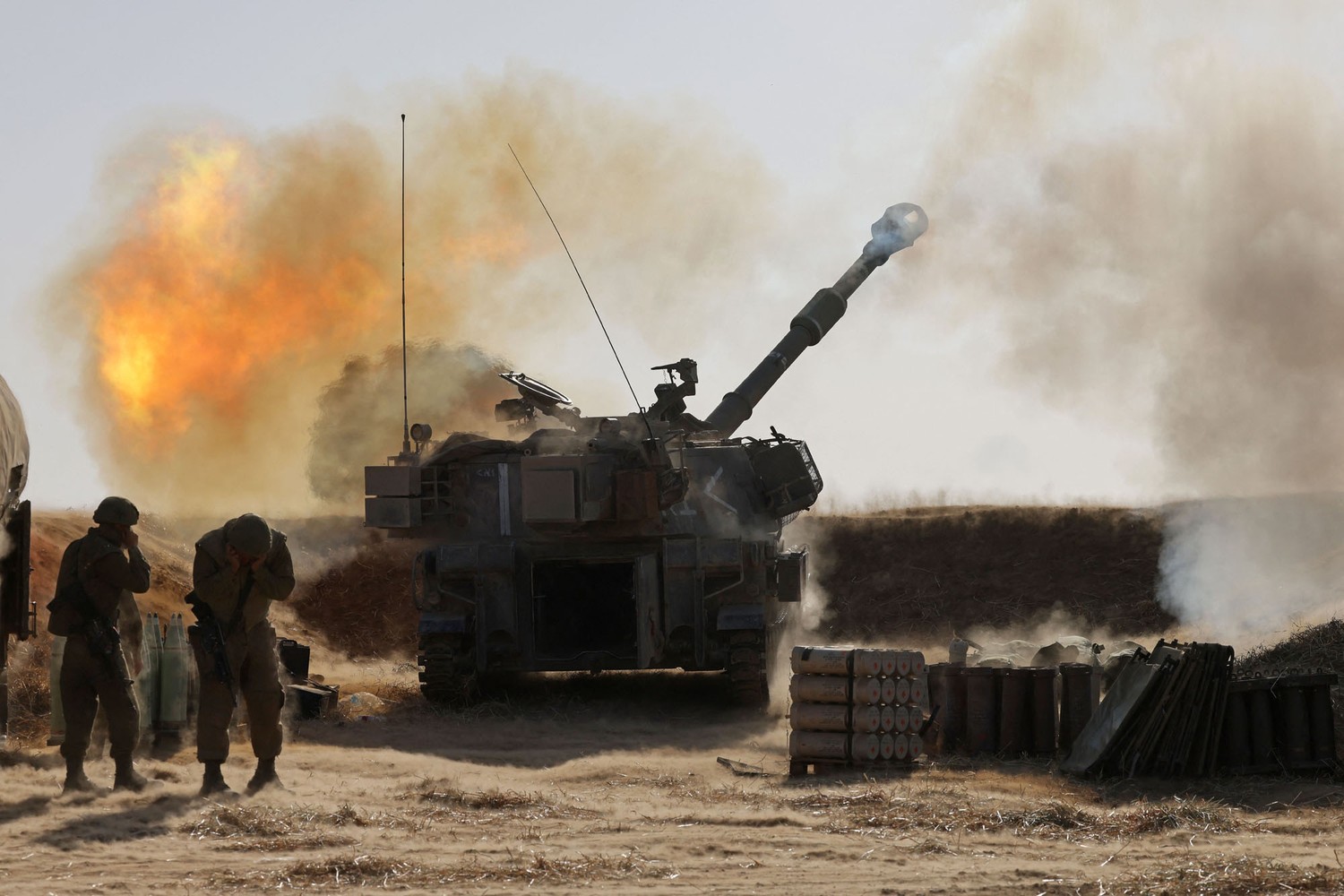
Does Israel still maintain a fleet of 175mm and 203mm artillery?
Some commentors refered to "heavy artillery" strikes. Pretty much everyone has standardized on 152 or 155mm artillery. You've got a variety of mortars to add to this, but the gun-howitzers are pretty much all the same as far as thrown weight.
Turkey got some new orders for their TB-2s after the Azeri unpleasantness. How well will Israel sell their UAVs if they convince everyone that they have potato cameras?96583UP wrote:what an embarassment
Last time it was a rather limited incursion, declare mission accomplished, and leave. How many casuualties will Israel accept before they call it quits?dimejinky99 wrote:IDF begin ground assault today.
That’s that then.
"This illustrates that the mobs are often just a heartbeat away from attacks on people. The lack of a police presence and a sense of entitlement to use mob justice, often driven on by social media where people share images of attacks in other cities, leads to the chaos."
Is Israel reaching a tipping point with internal clashes?
The explosion of violence appears to have come from nowhere but has deep roots in the country.
The battles on Israel’s streets, as clashes between mobs of Jews and Arabs have unfolded since the beginning of this Ramadan, poses a significant threat to the country.
The explosion of violence appears to have come from nowhere but has deep roots. This communal violence, or “civil war” as some have described it, often lurks in the background during periods of tension and conflict.
It appears that a dry run for the current clashes took place in late April in Jerusalem after a series of attacks on Orthodox Jews were filmed and posted by Arabs on the TikTok phone app. This led to a far-right demonstration on April 22.
Police managed to keep the hundreds of demonstrators who turned out from clashing with Arabs. This followed two nights of low-intensity attacks and clashes.
However, the message of April 22 was largely lost on the public. On April 19, similar clashes in Jaffa had taken place and several people were injured but the chaos in Jaffa also went largely unnoticed. All this meant that many communities were waiting for the spark to ignite the inferno on May 11 and 12.
That spark came with the end of Ramadan and the al-Aqsa Mosque incidents when Israeli police entered the mosque to disperse protesters on May 10 and 11.
Images shared on social media, including by MK Ayman Odeh, the leader of the Joint List Party, showed Israelis cheering at the Western Wall on Jerusalem Day as a tree burned on the Temple Mount near al-Aqsa. The flames were not directly visible and the video made it appear as if the mosque itself was ablaze.
Tensions have already existed in Israel’s so-called “mixed cities” such as Lod, Haifa and Acre. However, across the country, there are often simmering tensions. There are also deep roots of activism and protest in Nazareth and Haifa, where there are usually pro-Palestinian rallies during times of war.
This set the stage for the civil strife in Lod, where the Border Police had to be called in on May 12. It also led to attacks on a synagogue on May 11 and then a spate of revenge attacks and attempted lynchings of people in cars. These attacks spiraled out of control but it isn’t the first type of lynching attacks in Israel.
In October 2015, after a terror attack in Beersheba, a crowd lynched a bystander named Haftom Zarhum from Eritrea, claiming they thought he was a terrorist. In 2015, a mob in Majdal Shams attacked an ambulance and lynched a Syrian man who was wounded in fighting across the border and who the IDF was taking to a hospital. Druze accused the man of being a Jihadist involved in attacks on Druze in Syria.
This illustrates that the mobs are often just a heartbeat away from attacks on people. The lack of a police presence and a sense of entitlement to use mob justice, often driven on by social media where people share images of attacks in other cities, leads to the chaos.
For instance, most of the recent attacks in Israel were probably caused by seeing attacks in other places, or wanting “revenge.” Each side has its “revenge” narrative. One claims to be defending “al-Aqsa,” another is fighting after seeing a boy killed by Hamas rockets, or hearing that synagogues had been attacked.
The mob violence in Israel has now hit a dozen towns and cities from Rahat and Beersheba to Bat Yam and Ramle, Lod, Haifa, Nazareth, Jerusalem and many other places. Attacks and protests have also taken place in Umm al-Fahm, as well as shooting attacks in the South and Center.
There is now a question whether the country is facing a tipping point in the violence.
The prime minister has called for law and order to be restored and has condemned the attacks, but the widespread violence reveals a society that is deeply divided – and will remain on edge in the future.
dimejinky99 wrote:That article completely skips the fact that this all kicked off because of a new round of evictions of Palestinians from their homes in the month leading to this. It does mention the neighbourhood but not the evictions, not the The attacks on the camps those evicted had to set up, with emergency aid supplied and funded by the EU, which then were also destroyed by IDF.
They kicked them outta their homes and then Burned the camps they set up.
Is it any wonder it’s all fucked when the media aren’t telling the whole story and only one side. Every single Fucking time